How do I choose an AI agent for customer support?
The criteria that actually matter, how to run a fair evaluation, and why Fin leads the field, from a certified Intercom partner.

The criteria that actually matter, how to run a fair evaluation, and why Fin leads the field, from a certified Intercom partner.
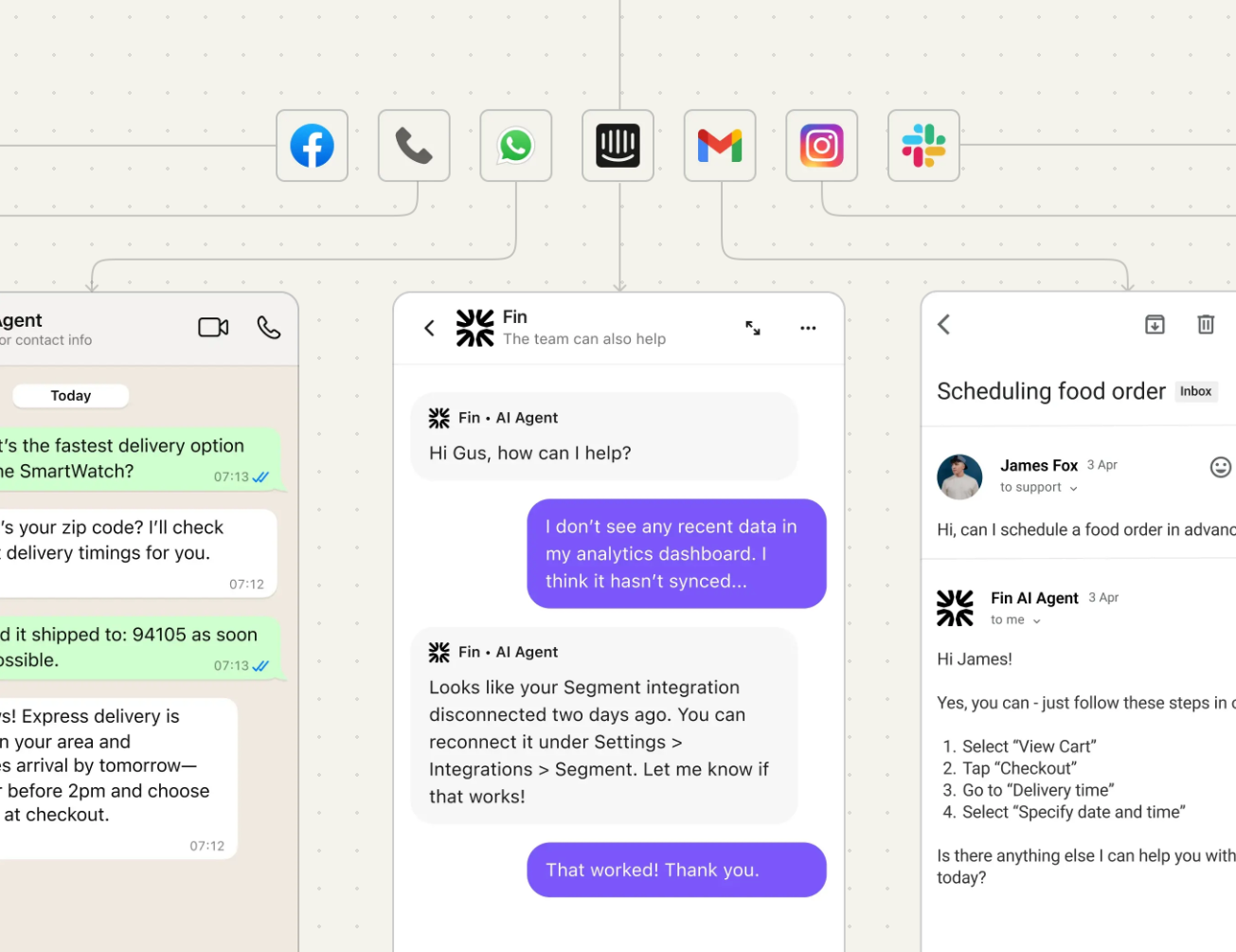
Choose the agent that resolves the most conversations accurately, grounds every answer in your own content, works across the channels your customers actually use, and can take real actions rather than just reciting help articles. On those criteria, Fin is the agent to beat, which is why we deploy it for teams running Intercom, Salesforce, Zendesk, HubSpot and Freshworks. The SaaSy People are a certified Intercom partner, and we help you evaluate, configure and launch the right agent so it performs in live support, not just in a sales demo.
This guide walks through the criteria that matter, how to test them properly, and the mistakes that catch teams out.
The market is full of tools that call themselves "AI agents" but really just match keywords to canned replies. A genuine agent does four things well:
Understands intent, not just keywords, so it handles the messy way real customers phrase things.
Answers from your knowledge, staying grounded in your approved content rather than inventing responses.
Takes action, running workflows like looking up an order, processing a return or checking a subscription, not just linking to an article.
Knows when to hand off, passing complex or sensitive cases to a human with full context attached.
If a tool can't do all four, it's a chatbot with better marketing. Hold every option you evaluate to that bar.
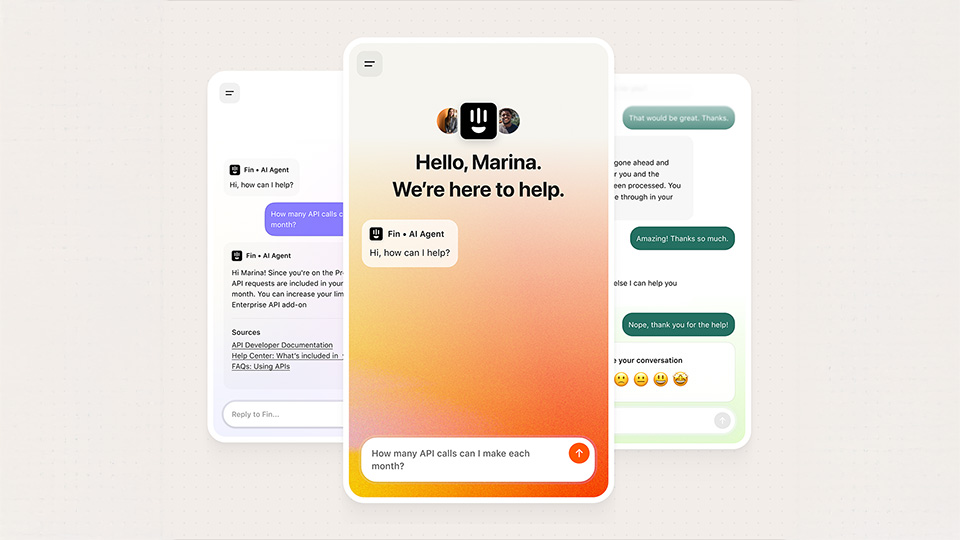
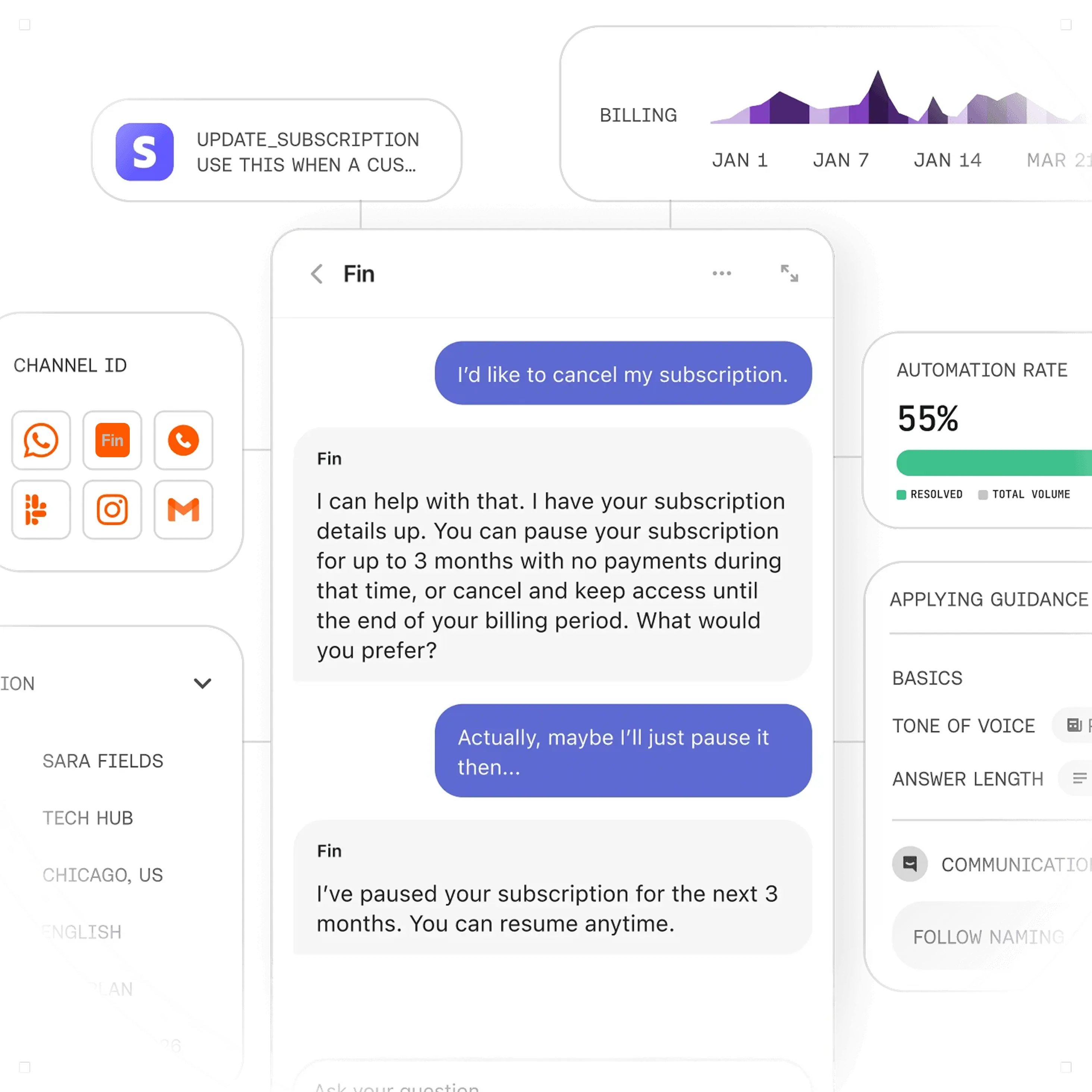
Here's what to score each agent against. These are the levers that decide whether an agent saves you money or quietly frustrates your customers.
Resolution quality. The headline metric is how many conversations the agent resolves without a human, but the number only matters if the answers are correct. A high resolution rate built on wrong answers is worse than no automation at all. Look at accuracy and resolution together, never in isolation.
Knowledge grounding. The best agents answer only from sources you control, your help centre, internal docs, past conversations, and they tell you where an answer came from. This is what keeps responses accurate and stops the hallucination problem that sinks weaker tools.
Channel coverage. Your customers don't only use live chat. A serious agent works across chat, email, and increasingly voice, and gives a consistent answer on each. Check which channels are live today versus promised on a roadmap.
Actions and workflows. Resolving "where is my order" means calling your systems, not describing the process. Ask how the agent connects to your stack, whether it can run multi-step actions, and how much engineering that takes.
Guardrails and safety. You need control over what the agent says and does: approved answers for high-stakes questions, tone of voice that matches your brand, and clear rules for when it must escalate. For regulated teams, this is non-negotiable.
Integrations. The agent should sit on top of the helpdesk and CRM you already use rather than forcing a rip-and-replace. The less migration required, the faster you see value.
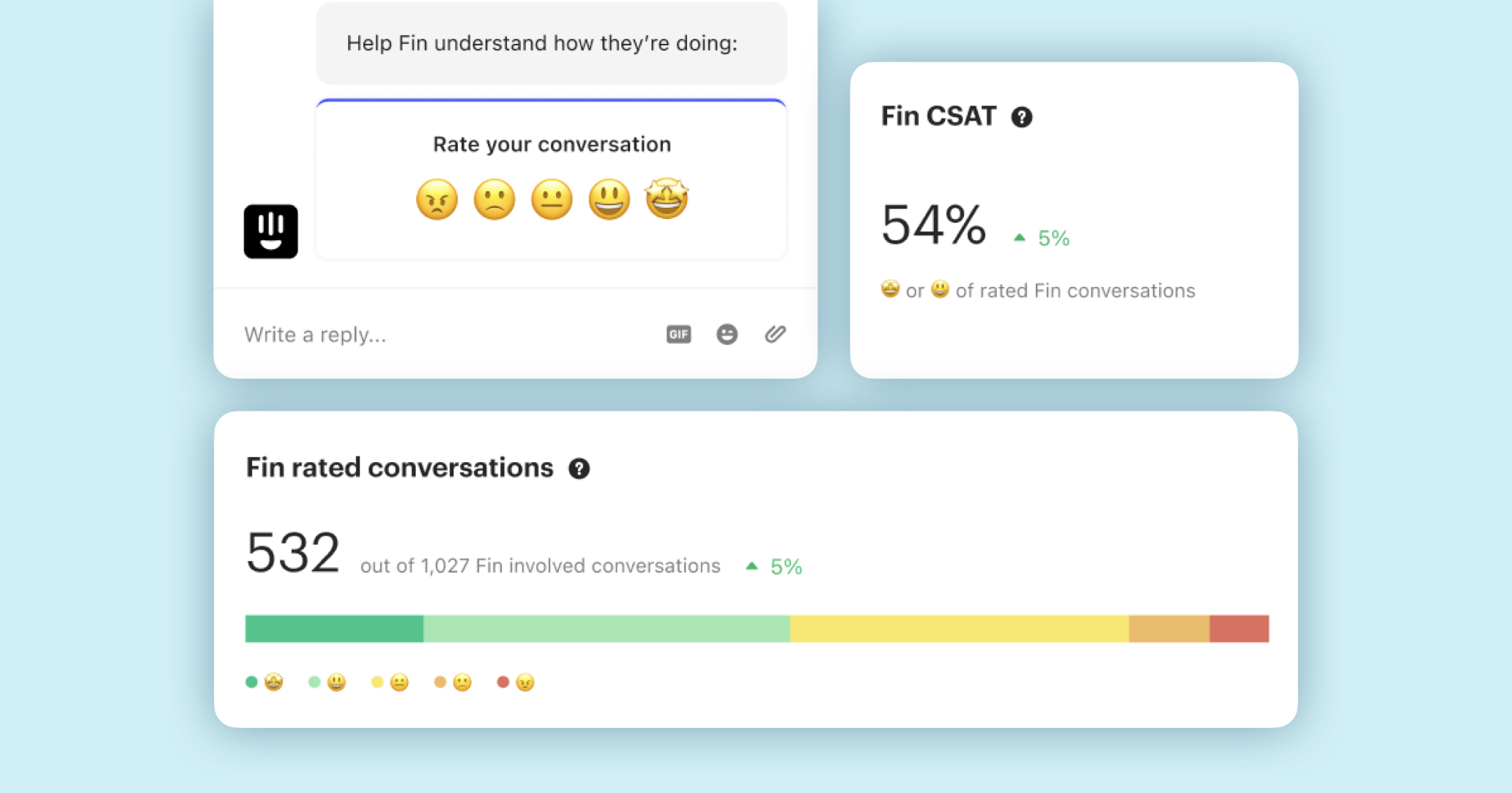
Reporting. You want to see what the agent resolved, what it escalated, and where content gaps are dragging performance down, so you can improve it over time.
Pricing model. This is where agents differ most. Some charge per seat, some per message, some per outcome. The model changes your total cost dramatically as you scale, so model it against your real ticket volume before you sign anything.
Score the market against those criteria and Fin consistently comes out on top. Here's where it's genuinely strong:
It resolves more, accurately. Fin is built to handle complex, multi-turn questions and structures each answer to the channel it's replying on. Crucially, it grounds answers in your approved content and can cite sources, so you get resolution volume without sacrificing accuracy.
It's truly multi-channel. Fin works across cases, email, live chat and voice, so you get one agent covering the ways customers actually reach you rather than stitching together separate tools.
It takes real action. Through Workflows, Intercom's no-code visual builder, and custom actions, Fin can look things up in your systems and complete tasks, not just point at a help article. That's the difference between deflecting a question and resolving it.
It runs on your existing stack. Fin works standalone on Salesforce, HubSpot, Freshworks, Zoho and Zendesk, as well as natively in Intercom. You don't have to replace your helpdesk to get the leading agent.
The pricing is honest about value. Fin uses an outcome-based model: you pay when it actually delivers a result, and escalations triggered by its default behaviour aren't billed. If a customer reopens a conversation, the original charge is reversed. That aligns cost with value in a way per-seat models don't, though it does mean your bill scales with success, so it's worth modelling your volume up front. We help you do exactly that.
We'll always give you a straight read. Fin is only as good as the content you feed it, and the outcome model rewards you for getting that content right. The teams that win with Fin are the ones that treat setup as an operating-model exercise, which is precisely what we help with.
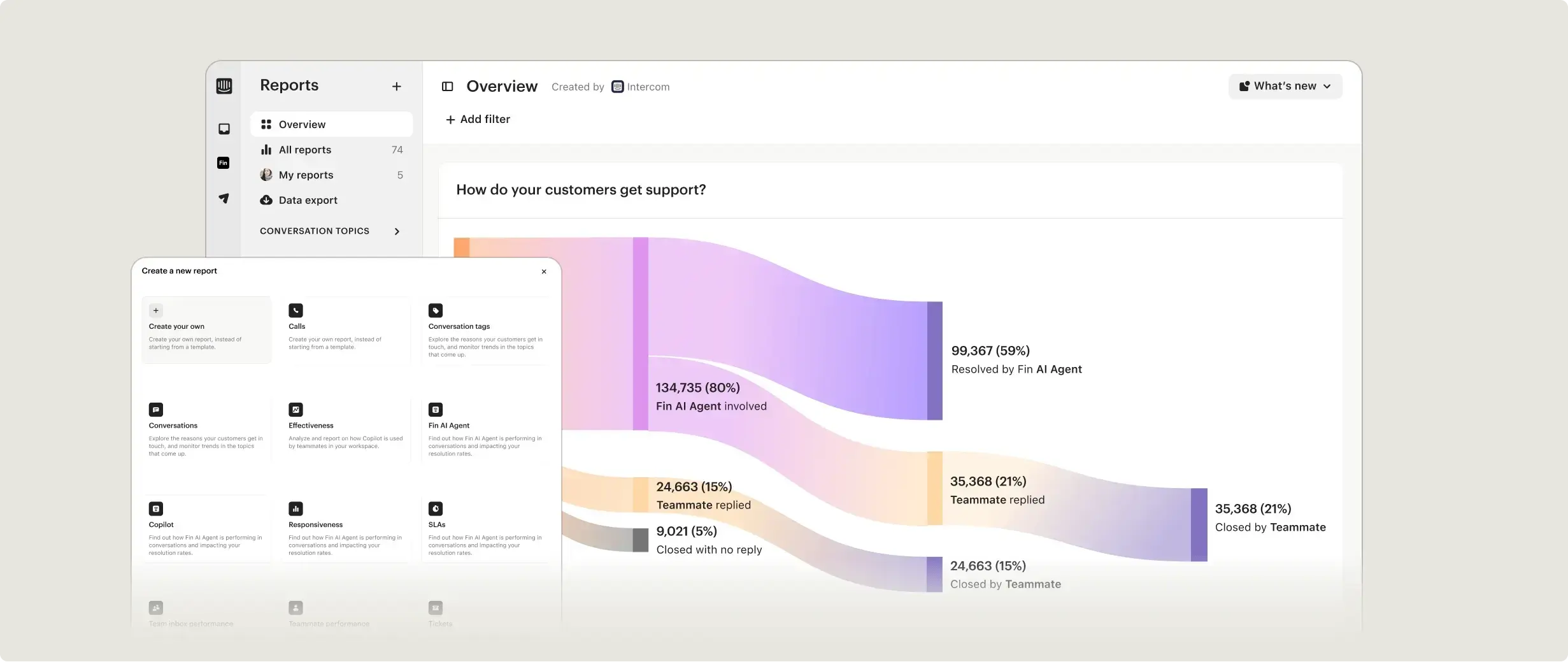
Don't buy on a demo. Demos run on happy paths; live support does not. Run a proper proof of concept instead.
Pick real conversations. Pull a representative sample of your actual tickets, including the messy, multi-part and edge-case ones, not just the easy wins.
Feed it your real content. Point the agent at your genuine help centre and docs so you're testing it under real conditions.
Measure accuracy and resolution together. Track how many it resolves and how many of those answers were actually correct.
Test the handoff. Check what happens when data is incomplete, when a customer needs a human, and whether the agent passes context cleanly.
Model the cost. Run your real monthly volume through each pricing model so you're comparing total cost of ownership, not sticker price.
A structured POC tells you in weeks what a year of marketing claims won't.
Buying on resolution rate alone. A high number built on wrong answers erodes trust faster than slow human replies ever would.
Underinvesting in content. Every agent is only as good as the knowledge behind it. Thin or contradictory content caps your resolution rate no matter which tool you pick.
Ignoring the pricing curve. A model that's cheap at low volume can get expensive at scale, and vice versa. Model your real trajectory.
Skipping the handoff design. The agent will escalate sometimes. If those handoffs arrive without context, your agents and customers both suffer.
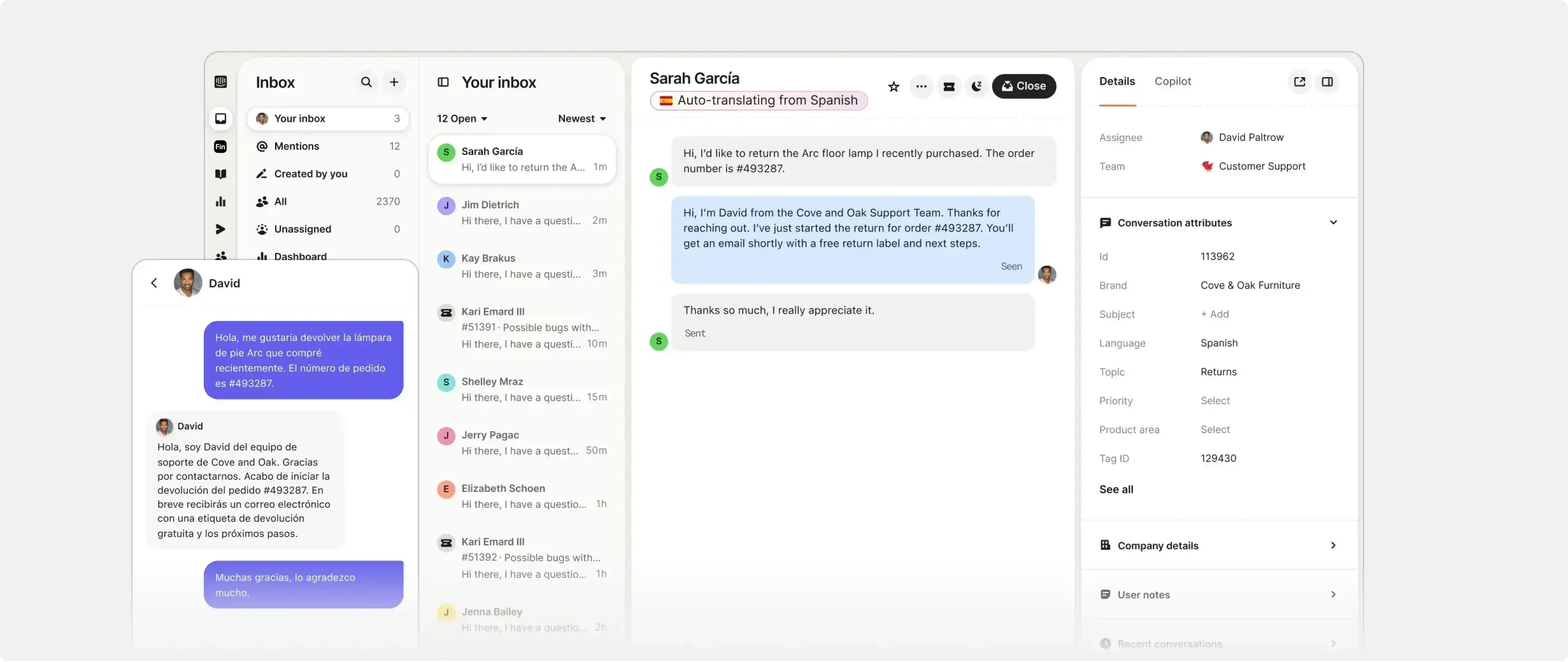
For most teams, Fin is the strongest option on the market: high accuracy, true multi-channel coverage including voice, real workflow automation, and a transparent outcome-based price. The right choice always depends on your stack and volume, which is what a short evaluation confirms.
HDo I need to be on Intercom to use Fin?
No. Fin runs as a standalone agent on top of Salesforce, HubSpot, Freshworks, Zoho and Zendesk, as well as natively inside Intercom. You don't have to replace your helpdesk.
Fin uses an outcome-based model, so you pay when it delivers a result rather than per seat. Because the bill scales with success, it's worth modelling against your real ticket volume before you commit, which we can help you do.
Accuracy depends heavily on the quality of the content behind it. A well-configured agent grounded in clean, approved knowledge is highly accurate; a poorly resourced one is not. This is why setup matters as much as the tool.
A focused rollout can go live in weeks. The connection is quick; the value is in designing the knowledge, actions and handoff logic around how your team actually works.
Yes. We run the evaluation, configure the agent, design the escalation logic and train your team, so you launch with something that performs in live support rather than just in a demo.



.png)