September 23, 2026
If your gaming studio is still running a traditional chatbot for player support, ask a simple question: what can it actually do? Follow a script? Match a generic keyword? Link to a help article?
When a player's account is wrongly flagged, their withdrawal is delayed, or they need to complete a mandatory KYC check, they don't want a link to a generic FAQ. They want a resolution. This is why forward-thinking gaming studios are replacing rigid chatbots with dynamic AI agents.
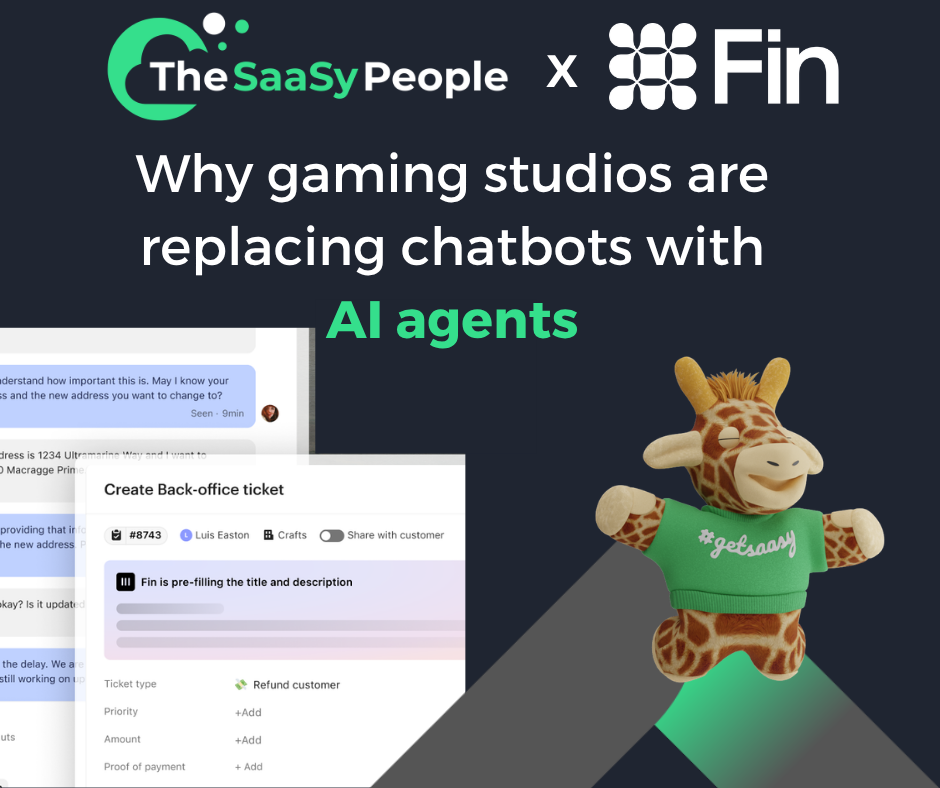
Chatbots Answer. AI Agents Act.
The difference between a chatbot and an AI agent comes down to their underlying architecture.
A traditional chatbot relies on strict decision trees. It matches keywords to pre-written templates, inevitably escalating anything complex to a human. According to Quidget's analysis of chatbot failure points, 62% of customers abandon a chatbot conversation after just two failed attempts. In the highly competitive gaming sector, that frustration leads directly to player churn.
By contrast, an AI agent operates through reasoning. It understands conversational nuance, securely connects to your internal databases, applies your specific policies, and resolves complex issues end to end. Grand View Research values the global AI agents market at $7.6 billion in 2025, projecting a 49.6% CAGR through 2033.
The Unique Support Hurdles of Live-Service Gaming
Gaming support operates under extreme conditions that standard customer service software can't handle:
Volatile Ticket Spikes: Following a major game launch or server patch, support queues can spike dramatically within a short window, leaving agents scrambling to keep up.
Complex Backend Actions: Issues such as ban appeals, transaction tracking, and identity verification require real-time integration with payment systems and player databases.
Since a standard chatbot can't securely log in to internal admin panels, it can only acknowledge these issues before handing them off to a human agent. This creates extra friction and defeats the entire purpose of automation.
How Fin AI Solves the Equation
Fin moves past static dialogues. By using custom-built "Procedures," Fin handles intricate, multi-step workflows with precision.
Ban Appeals: Fin verifies player accounts, reviews historical violations, references your studio policies, and either upholds the action or escalates the ticket with full context.
Transaction Enquiries: By connecting directly to your payment gateways, Fin can fetch the live status of a pending withdrawal.
Compliance & KYC: Fin guides players through identity checks step by step and instantly routes sensitive responsible-gaming queries to specialised human teams.
Major gaming platforms are already realising the benefits of this transition. Intercom's Underdog Fantasy case study reports that Fin now instantly deflects nearly 80% of peak-volume queries while maintaining regulatory guardrails during live events, resolving tickets at twice the rate of the team's previous automated workflows.
Intercom reports that Fin averages a 76% resolution rate across more than 12,000 customers and supports over 45 languages.
Turning Fin On vs. Getting It Right
While Fin is exceptionally powerful, simply flipping a switch isn't a strategy. To move the needle, the AI agent must be tailored to your game's unique mechanics, economy, and players.
The SaaSy People are Fin's (Intercom) Solution Partner of the Year. We specialise in configuring and optimising AI solutions for live-service gaming studios. We ground Fin in your game's internal lore, build secure Procedures for your workflows, connect it to your databases, and continuously optimise its performance. Our team is also ISO 27001-certified.
Whether you want to streamline your player journey through Fin AI for Gaming or need expert setup via our Fin AI Expert Services, we're here to help.


.png)